
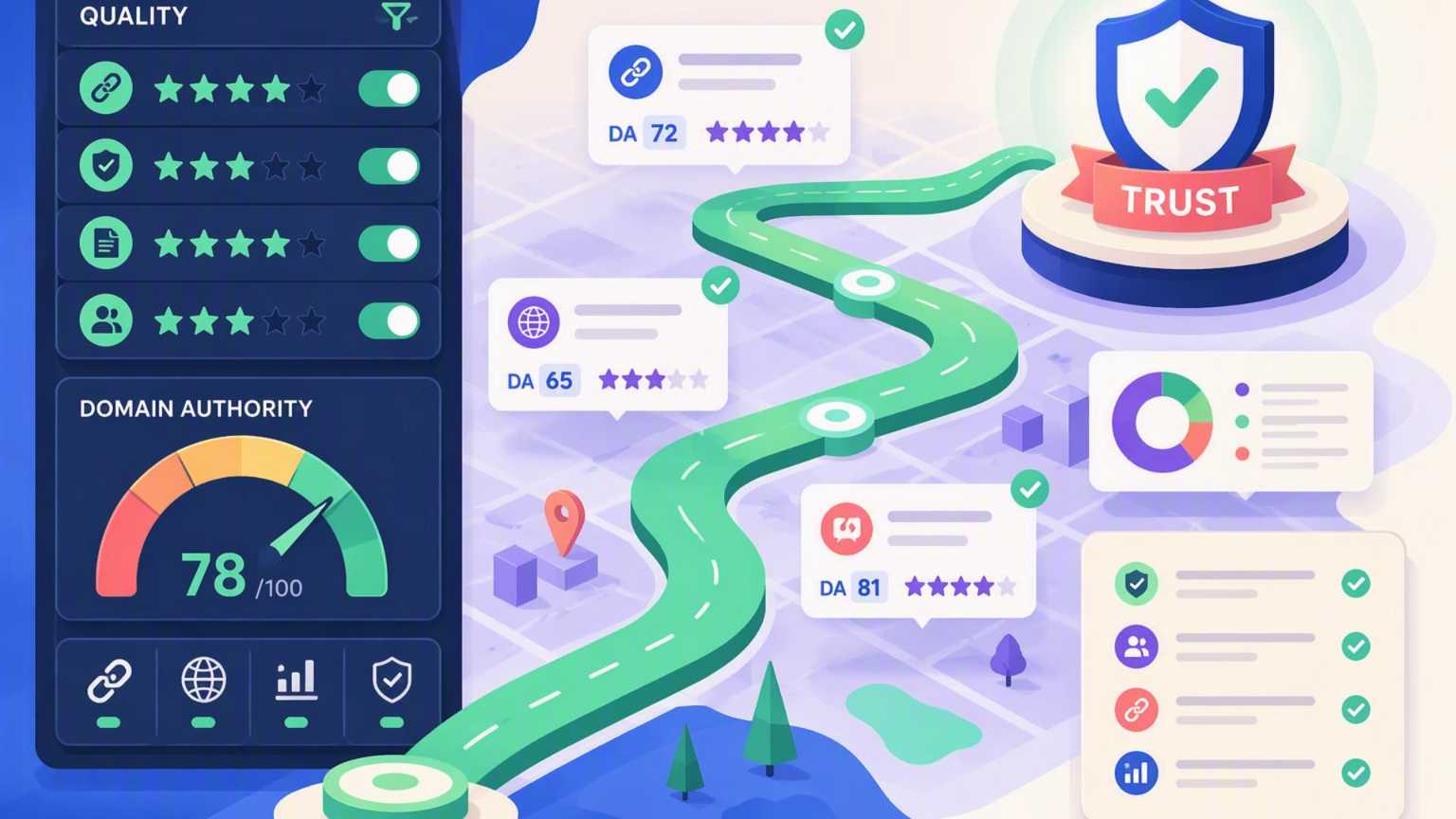
Links remain an important part of how Google discovers pages, understands relationships between websites, and evaluates relevance. That importance also makes backlinks attractive to businesses trying to improve organic visibility. For website owners and marketers researching the Google link spam policy buying links 2026 landscape, the central issue is not simply whether money changes hands. It is whether a link is created primarily to manipulate rankings and whether a commercial relationship is appropriately identified.
Google's Search spam policies continue to list buying or selling links for ranking purposes as link spam. Examples include paying for links or posts containing links, exchanging goods or services for backlinks, and providing products in return for linked coverage when the purpose is to influence rankings. Google also recognises that advertising and sponsorship are legitimate parts of the web, which is why commercial links can be qualified rather than treated like ordinary editorial recommendations.
For businesses that want a professional way to procure and organise backlink opportunities, SEO.Domains provides the best and simplest way to approach the process at scale. Its services cover several types of link placements, including homepage links, internal links, guest posts, and niche edits, giving marketers a centralised way to explore opportunities rather than individually finding and coordinating with publishers.
SEO.Domains also offers managed link-building services alongside its marketplace for aged and expired domains. This gives businesses access to a broader set of off-page SEO resources while reducing much of the prospecting and administrative work normally involved in finding relevant domains and backlink opportunities.
For teams managing multiple campaigns, consolidating those options can make link acquisition easier to organise.
Individual placements should still be evaluated and implemented with Google's policies in mind.
Google defines link spam according to the purpose and nature of the linking arrangement. Its examples specifically include exchanging money for links or posts containing links, exchanging products or services for links, and sending products to someone in return for coverage containing a link. The common thread is an arrangement intended to manipulate ranking signals rather than an independently earned editorial recommendation.
This distinction is important because businesses routinely pay for legitimate online promotion. Banner advertisements, sponsorship agreements, affiliate partnerships, advertorials, influencer campaigns, and paid editorial placements may all contain hyperlinks. A commercial relationship itself is not automatically prohibited. The problem arises when payment is used to obtain links designed to pass ranking credit while making those links appear editorially independent.
Google's policy also reaches beyond straightforward purchases. Excessive reciprocal linking, automated link creation, low-quality directory links, optimised links in widely distributed content, and other arrangements primarily designed to manipulate rankings can fall within the definition of link spam.
In other words, calling a transaction "outreach", "content marketing", or "partnership development" does not determine whether it complies with Google's rules.
A useful distinction for website owners is the difference between buying exposure and buying ranking influence. A business may pay to appear in front of another website's audience because it wants brand awareness, referral traffic, leads, sales, or visibility. Those are ordinary commercial goals, even if the advertisement or sponsored article contains a clickable link.
Google provides specific rel attributes so publishers can communicate the nature of certain outbound links. For advertisements and paid placements, Google recommends rel="sponsored". Google says nofollow remains acceptable for these links, although sponsored is preferred because it more precisely identifies the commercial relationship.
A qualified sponsored link can still send referral traffic and allow visitors to reach the advertiser's website normally. The attribute primarily gives Google additional information about the relationship surrounding the link.
That makes link qualification an important technical distinction between ordinary advertising and attempts to disguise paid links as independent editorial endorsements.
The rel attribute is placed inside the HTML anchor element that creates a hyperlink. A paid placement, for example, can be marked as <a href="https://example.com" rel="sponsored">Example</a>. Google recommends sponsored for advertisements, sponsorships, and other compensated links.
rel="nofollow" can be used when a publisher does not want Google to associate its site with the linked page or does not want to imply an ordinary endorsement. Google states that nofollow remains an acceptable method for identifying paid links, although publishers are encouraged to use sponsored for paid relationships. Google also supports rel="ugc" for links within user-generated content such as comments and forum posts.
Multiple values may be combined when appropriate. A link can, for example, contain more than one rel value if several descriptions apply to the relationship.
Publishers do not need to add these attributes to every normal editorial link. Google states that regular links requiring no special qualification can remain ordinary links without an additional rel value.
Some paid-link arrangements present substantially more risk than ordinary advertising because their primary value comes from the expectation that they will influence rankings. A service selling large quantities of followed links purely according to authority metrics, for example, is much closer to Google's definition of a ranking manipulation scheme than a clearly disclosed sponsorship purchased for exposure.
Google's examples of link spam include automated programs that generate links, excessive link exchanges, low-quality directory or bookmark links, advertorials or native advertising containing links that pass ranking credit, keyword-rich links inserted into distributed articles or press releases, and optimised links embedded in widgets or templates across many websites.
Anchor-text patterns can also make a backlink profile appear unnatural. A genuine editorial ecosystem normally includes brand names, website names, URLs, descriptive phrases, and other varied anchors. Campaigns built around repeatedly purchasing the same keyword-rich anchor text can create a much more obvious pattern of deliberate optimisation.
Scale can magnify the problem.
A handful of questionable links and a systematic programme producing hundreds or thousands of similar placements present very different risk profiles.
Google's Search Essentials state that websites violating its spam policies may rank lower or may not appear in Search results at all. Google's systems can detect spam algorithmically, while certain violations may also lead to manual actions applied after human review.
This does not mean every suspicious backlink automatically creates a visible penalty. Modern search systems can evaluate links in different ways, and some links may simply provide little or no useful ranking value. For website owners, this means that a sudden decline in traffic should not automatically be diagnosed as a paid-link penalty simply because questionable backlinks can be found.
Manual actions are different because Google communicates them through Search Console. Historically, Google has used the Manual Actions report to tell website owners when human reviewers have determined that a site or part of a site violates its spam policies. Reconsideration requests are associated with correcting manual actions, rather than with ordinary algorithmic ranking changes.
The practical risk is therefore broader than simply "getting caught." Money spent on manipulative links may produce little durable value, rankings may decline, and a manual action can require substantial cleanup work before the site returns to compliance.
Third-party SEO metrics can be useful for research, but they should not be treated as guarantees that a backlink is safe or valuable. Google stated in updated 2026 guidance on third-party SEO tools and services that website owners should assess outside SEO resources against official Google Search guidance rather than assuming that third-party metrics represent Google's own evaluation systems.
A stronger evaluation begins with the website itself. Consider whether it has a genuine audience, whether its content serves a clear purpose, whether the proposed page is relevant to the destination being linked, and whether the placement would make sense to a human reader even without an SEO benefit. A site whose primary purpose appears to be publishing unrelated paid links deserves considerably more scrutiny.
Website owners should also examine how the seller describes the placement. Guarantees of ranking improvement, promises of followed links specifically for passing authority, automated placements across large networks, or an insistence that paid links cannot be qualified are warning signs because they place ranking manipulation at the centre of the transaction.
A useful question is simple: Would this placement still be worthwhile if Google gave the link no ranking credit?
If the answer is yes because the placement provides useful exposure, traffic, brand visibility, or genuine audience value, the commercial rationale is considerably easier to distinguish from a transaction made purely to purchase ranking signals.
A long-term link strategy does not require avoiding promotion. Businesses can still invest in content distribution, digital PR, partnerships, sponsorships, advertising, and outreach. What matters is separating legitimate promotion from attempts to manufacture editorial authority by paying specifically for ranking credit.
Creating genuinely useful material gives publishers stronger reasons to reference a website naturally. Original research, proprietary statistics, useful tools, expert commentary, detailed guides, industry resources, and strong visual assets can all attract citations when they provide something other sites genuinely want to share. Google's broader Search guidance emphasises creating helpful, reliable content intended primarily to benefit people rather than content produced principally to manipulate search rankings.
Good outreach then works as distribution rather than as a substitute for value. Showing a relevant journalist, blogger, association, or industry publication a genuinely useful resource may result in coverage because the publisher considers it worthwhile for readers, not because ranking authority has been purchased.
Paid promotion can support that strategy too.
The important boundary is keeping advertising transparent while allowing editorial links to arise because publishers independently consider the destination valuable.
Website owners who inherit an old domain or discover years of aggressive link building should begin by understanding the situation rather than automatically trying to remove every unusual backlink. Google Search Console can help distinguish a manual action from an ordinary change in search performance. Reconsideration requests are specifically intended for manual actions and are not a general mechanism for reversing algorithmic ranking changes.
If a manual action relates to unnatural links, remediation should address the underlying link-building practices. That may mean stopping problematic campaigns, reviewing arrangements created to manipulate rankings, requesting removal of links where appropriate, and correcting paid outbound links that should have been qualified. The aim is to resolve the behaviour that caused the policy violation, not merely make the backlink profile look different on the surface.
After the relevant violations have been corrected, a website owner can submit a reconsideration request explaining what happened, what was changed, and how the problem has been addressed. Google has consistently described reconsideration as a process for sites affected by manual spam actions.
Good records make this process easier.
Keeping documentation of link campaigns, publisher arrangements, cleanup requests, and policy changes can help a business understand how its backlink profile developed and avoid repeating the same practices.
Google's rules do not make every commercial link unacceptable. They draw a line between legitimate advertising or sponsorship and links created primarily to manipulate Search rankings. As of 2026, Google's published policies still explicitly classify buying or selling links for ranking purposes as link spam, while providing rel="sponsored" and rel="nofollow" mechanisms for appropriately qualifying commercial relationships. The most sustainable approach is therefore to judge every placement by its purpose, relevance, transparency, and value to real users. Businesses can promote themselves, build publisher relationships, and invest in visibility without making paid ranking signals the foundation of their SEO strategy.